
- Understanding What Makes a Great Business
- The Fifteen Points — Fisher’s Definitive Business Checklist
- When to Buy and When to Sell
- Concentration, Diversification, and Portfolio Construction
- The Role of Management in Long-Term Value Creation
- Related Video
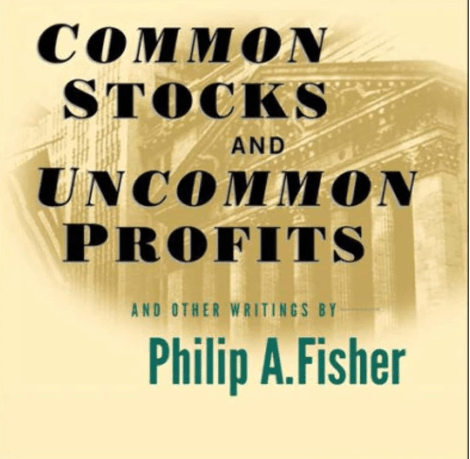
Below are some highlights from the best selling book Common Stocks and Uncommon Profits by Philip Fisher. It is an invaluable reading and has been since it was first published in 1958. The book retains the investment wisdom of the original edition and includes the perspectives of the author’s son Ken Fisher, an investment guru in his own right in an expanded preface and introduction
Understanding What Makes a Great Business
- Buy outstanding businesses, not cheap stocks.
- The goal is finding exceptional companies, not merely undervalued ones.
- A great business compounding at high rates for decades creates far more wealth than a mediocre business bought at a discount.
- The distinction between a cheap stock and a great business is the most important separator between ordinary and extraordinary investors.
- The scuttlebutt method is the most powerful research tool available.
- The best investment insights come from talking directly to competitors, suppliers, customers, and former employees — not from financial statements alone.
- This real-world intelligence reveals what numbers never show: culture, competitive position, and management quality.
- An investor willing to do this legwork consistently operates with an information advantage that spreadsheet analysis alone cannot replicate.
- A company’s growth potential must be evaluated on two dimensions simultaneously.
- Fisher separated companies into those with potential to grow current products and those with capability to develop entirely new ones.
- Neither dimension alone is sufficient — great current products without an innovation pipeline eventually hits a ceiling.
- The most exceptional businesses demonstrate strength on both dimensions, sustaining growth across multiple product generations.
- Sales organization quality is as important as product quality.
- The best product in the world fails without a world-class sales and distribution organization behind it.
- Fisher looked at how well companies understood customer needs, translated features into value, and delivered strong after-sale support.
- Companies excelling on all three build switching costs and customer loyalty that compound into durable pricing power.
- Profit margins are the true test of operational excellence.
- Fisher was not satisfied knowing a company had high margins — he wanted to understand what management was doing to sustain and improve them.
- He viewed management’s attitude toward margins as a revealing window into operational discipline and long-term thinking.
- Companies that constantly work to improve margins even during strong revenue growth demonstrate exactly the managerial excellence Fisher sought.
- Research and development effectiveness separates lasting growth from temporary success.
- Fisher paid close attention to how productively companies converted R&D dollars into commercial products — not just how much was spent.
- A company spending generously on R&D with little commercial output is destroying capital; one spending modestly but generating breakthroughs is creating enormous value.
- The R&D productivity ratio — commercial output per dollar invested — was one of his most revealing and underappreciated metrics.
The Fifteen Points — Fisher’s Definitive Business Checklist
- Does the company have products with sufficient market potential to make possible a sizable increase in sales for several years?
- Fisher wanted not just current sales strength but a credible multi-year runway without requiring fundamental business model changes.
- He was skeptical of companies dependent on a single product or single customer, preferring multiple growth avenues providing resilience.
- This forward revenue visibility question is the first filter — if the answer is no, nothing else in the checklist matters.
- Does management have determination to develop new products when current growth potential is largely exploited?
- This question goes directly to whether a company is building an enduring institution or simply riding a single wave.
- Fisher looked for management actively investing in the next product generation before the current one peaked — anticipating transitions proactively.
- Companies answering this well sustain above-average growth across multiple decades rather than flaming out after one successful cycle.
- How effective are the company’s research and development efforts relative to its size?
- Fisher evaluated R&D not by raw dollar amounts but by the track record of converting investment into commercially successful products.
- Small companies with focused R&D programs often generated far more commercial output per dollar than large bureaucratic research departments.
- The key question was always: how much of what these researchers are working on actually reaches the market and makes money?
- Does the company have an above-average sales organization?
- Fisher viewed sales capability as a genuine competitive moat — as difficult to replicate as a patented technology or proprietary process.
- He looked for sales forces that deeply understood customer problems and were supported by strong after-sale service.
- The best sales organizations build relationships that create repeat purchases and customer advocacy, compounding the value of every initial sale.
- Does the company have a worthwhile profit margin?
- Fisher would not consider investing in any competitive-industry company unless its margins were among the highest in that industry.
- Low-margin companies are inherently fragile — a small cost increase or economic slowdown can eliminate earnings entirely.
- High-margin businesses have a buffer allowing them to invest in growth and weather downturns without needing perfect execution every quarter.
- What is the company doing to maintain or improve profit margins?
- Having high margins today is not enough — Fisher wanted evidence of deliberate ongoing management effort to sustain and expand them.
- He looked for cost reduction programs, manufacturing efficiency initiatives, and pricing discipline as concrete evidence of margin stewardship.
- Management teams that actively manage margins through all business cycle phases were the ones Fisher trusted to preserve shareholder value.
- Does the company have outstanding labor and personnel relations?
- The quality of a company’s relationship with its workforce was one of the most reliable indicators of overall management quality.
- Fisher looked for low voluntary turnover, employee pride, and management practices giving workers genuine respect and fair compensation.
- Poor labor relations almost always surface in productivity problems and quality issues before they appear in the financial statements.
- Does the company have outstanding executive relations?
- Fisher distinguished between how companies treated hourly workers and how they treated executive talent — arguing both mattered enormously.
- He looked for organizations giving promising executives genuine early responsibility with promotion based on performance rather than tenure.
- Companies failing here consistently lost their best people to competitors, creating a talent drain compounding into strategic disadvantage over time.
- Does the company have depth to its management?
- Fisher was wary of companies whose success depended entirely on one or two exceptional individuals at the top.
- He wanted an organization deep enough in management talent that sound decisions were being made well at multiple levels throughout.
- This depth question becomes most critical during transitions — founder stepping back, acquisitions being integrated, or simultaneous expansion into new markets.
- How good are the company’s cost analysis and accounting controls?
- A company unable to cost-effectively analyze its own operations across products and geographies was flying blind on capital allocation.
- Fisher wanted granular understanding of which product lines and customer segments were actually profitable, not just aggregate margin data.
- Companies with the best cost analysis systems consistently made better investment decisions and detected problems earlier than competitors.
- Are there industry-specific factors that give important clues to how outstanding the company may be versus competition?
- Every industry has unique competitive dynamics that don’t fit neatly into a universal checklist, and the sophisticated investor must understand those deeply.
- In retail it might be inventory turn; in pharmaceuticals, patent duration and pipeline; in banking, credit culture and loan loss history.
- The investor who understands industry-specific competitive drivers better than consensus will identify outstanding companies earlier and with more conviction.
- Does the company have a short-range or long-range outlook in regard to profits?
- Fisher explicitly favored management teams that made short-term profit sacrifices to build long-term competitive position.
- He looked for concrete evidence: willingness to invest in unprofitable new products, deliberate margin undercutting to build share, or R&D spending paying off years later.
- The willingness to accept near-term pain for long-term gain was the single clearest indicator of whether management was truly building a great company.
- Will future growth require equity financing that will largely cancel existing stockholders’ benefit from anticipated growth?
- Excessive equity dilution is a silent destroyer of shareholder value — growth that constantly requires new share issuance forces existing shareholders to run in place.
- Fisher preferred businesses funding growth primarily through retained earnings and debt, reserving equity for truly exceptional opportunities.
- Tracking shares outstanding across a full business cycle — not just one period — was one of his most concrete research disciplines.
- Does management talk freely to investors when things go well but become evasive when troubles occur?
- Management candor during difficult periods was one of the most revealing indicators of overall integrity and quality.
- Any executive can speak eloquently when results are excellent — the real test is how transparently and honestly they explain setbacks and strategic mistakes.
- Companies whose management communicated openly and specifically about problems — with concrete plans to address them — were consistently the most trustworthy.
- Does the company have a management of unquestionable integrity?
- This was non-negotiable for Fisher — no business quality or market opportunity could compensate for management lacking integrity.
- He looked at how management treated minority shareholders, whether executive compensation was reasonable, and whether insiders’ interests were genuinely aligned with outside investors.
- A single clear incident of management acting against shareholder interests was disqualifying — not a yellow flag but an outright reason never to invest.

When to Buy and When to Sell
- The best time to buy is when a great company has a temporary problem.
- The most attractive entry points in truly great companies came from company-specific issues that were temporary and solvable by management.
- A production problem, one-time earnings shortfall, or product launch delay in an excellent business creates a price dip unrelated to long-term franchise value.
- The investor who correctly distinguishes a temporary problem from a permanent structural one — and buys aggressively — is practicing Fisher’s method at its most powerful.
- Timing the purchase matters less than the quality of what you buy.
- Fisher was relatively relaxed about paying a fair price for an outstanding business, arguing investors obsess too much over perfect timing.
- A business compounding intrinsic value at 15–20% annually makes a 10–15% overpayment on purchase essentially irrelevant within a few years.
- The investor who waits for a perfect price on a great business often waits forever, while one paying a fair price and holding for a decade almost always does extraordinarily well.
- There are only three valid reasons to sell a stock.
- Fisher was profoundly skeptical of frequent selling, believing most investors sold far too often and for entirely the wrong reasons.
- His three legitimate sell criteria: you made a mistake in the original analysis; the company has genuinely deteriorated; or you found a demonstrably superior opportunity requiring capital reallocation.
- Everything else — the stock has risen, the market looks expensive, you want to take a profit — was not a valid reason to sell an outstanding business.
- Selling a great company simply because it looks temporarily overvalued is almost always a mistake.
- Fisher watched investors repeatedly sell outstanding businesses because the P/E appeared high, only to watch the stock continue rising for years as earnings growth made the original price look cheap.
- The tax cost of selling, combined with the challenge of reinvesting into something of equal quality, means the bar for selling a great business should be extremely high.
- Fisher’s own experience taught him that holding outstanding businesses through apparent overvaluation was one of the most consistently profitable decisions an investor could make.
Concentration, Diversification, and Portfolio Construction
- Owning too many stocks is a sign of investor ignorance, not prudence.
- Fisher was one of investing’s most forceful critics of excessive diversification, arguing it guarantees mediocre results by spreading attention too thin.
- He believed thoroughly understanding five to ten outstanding businesses was far more valuable than superficially knowing thirty or forty average ones.
- Diversification reduces catastrophic single-position risk but simultaneously dilutes the outsized returns that come from strong conviction in a genuinely great business.
- The greatest investment profits come from concentration in your best ideas.
- Fisher’s own record — holding companies like Motorola for decades — was built on concentrated conviction in a small number of extraordinary businesses.
- He believed that by the time deep research was done to truly understand a great business, the work justified a meaningful position rather than a token allocation.
- Fear of being wrong should be managed through thorough pre-purchase research, not through position sizing so small that being right produces no meaningful benefit.
- Investors should accept significant short-term volatility in exchange for long-term superiority.
- Outstanding businesses regularly experience sharp price declines that have nothing to do with underlying business quality or long-term prospects.
- The investor who sells during these periods is trading away years of compounding for the illusion of short-term safety.
- Accepting volatility as the price of admission for superior long-term returns is a deliberate philosophical choice the best long-term investors make explicitly and hold to consistently.
The Role of Management in Long-Term Value Creation
- Management’s attitude toward shareholders is revealed in how it allocates capital.
- Capital allocation is the ultimate test of management quality — how a company chooses between reinvesting, making acquisitions, paying dividends, or repurchasing shares reveals more than any public statement.
- Fisher looked for management treating reinvestment as the highest priority when genuinely superior opportunities existed, and returning capital honestly when they did not.
- Managers who built empires through value-destroying acquisitions or hoarded cash without purpose were failing the capital allocation test in ways that inevitably showed up in long-term shareholder returns.
- The best managements are honest about their mistakes and learn from them.
- Fisher distinguished between management teams that openly acknowledged strategic errors and course-corrected decisively versus those that rationalized mistakes until they became crises.
- He viewed the willingness to say “we were wrong, here is what we are doing differently” as one of the most powerful positive signals an investor could observe.
- Organizations whose leaders modeled intellectual honesty about failure tended to correct problems faster and build cultures where employees felt safe surfacing issues early.
- Conservative accounting is a sign of management integrity and long-term orientation.
- Fisher was deeply suspicious of management teams that stretched accounting rules to maximize reported earnings, viewing aggressive accounting as an early warning signal of broader integrity problems.
- He preferred companies using conservative accounting choices — reserving generously, recognizing revenue cautiously, depreciating assets realistically — even when more aggressive choices were technically permissible.
- Conservative accounting produces earnings that are more reliable and trustworthy as a basis for long-term valuation because management has not borrowed from the future to flatter today’s results.
- Great management creates an environment where talented people want to work and stay.
- A company’s ability to attract and retain exceptional people at every organizational level was a leading indicator of competitive strength that appeared in financial results years before the market recognized it.
- Fisher looked for low executive turnover, a history of promoting from within, and a reputation in the industry as a place where talented people could build exceptional careers.
- Companies that consistently won the talent competition compounded their competitive advantage in ways extremely difficult for rivals to replicate and nearly invisible to investors focused purely on current financial metrics.
Philosophical Principles for Lifelong Investing
- The stock market is filled with individuals who know the price of everything and the value of nothing.
- Most market participants spend their time tracking prices and reacting to short-term news rather than understanding the underlying value of businesses they own.
- The investor who focuses on long-term earnings power, competitive position, and management quality operates in a fundamentally superior framework.
- This distinction between price-tracking and value-understanding is the philosophical foundation of everything in Fisher’s investment approach.
- Patience is the investor’s most valuable and most underutilized asset.
- Most investors destroyed value not by making terrible buy decisions but by failing to hold outstanding companies long enough to capture their full compounding potential.
- The typical investor who sold after a 50% gain missed the subsequent 500% or 1,000% that came from holding through the full business cycle and beyond.
- True investment patience — holding through volatility, valuation concerns, and short-term disappointments — is rarer and more valuable than almost any other investment skill.
- The investor’s own emotions are their greatest long-term enemy.
- Buying after prices have already risen, selling after they have already fallen, and reacting to market noise with decisions that override sound analysis are the behaviors that cause investors to systematically underperform.
- The discipline to ignore short-term price movements and maintain conviction in well-researched positions is not a natural human trait but a deliberately cultivated one.
- Investors who mastered their own emotional reactions did not merely do slightly better — they did dramatically better, because avoiding emotionally-driven mistakes accumulates exponentially over decades.
- Invest in what you deeply understand and resist the temptation to invest in what you don’t.
- Superior investment results come from operating in domains of genuine understanding rather than spreading attention across industries outside your expertise.
- An investor with deep knowledge of one industry — its economics, competitive dynamics, technology cycles, and management talent — will consistently outperform a shallow generalist.
- The temptation to invest in fashionable sectors you don’t understand is always present and always dangerous; staying within what you genuinely know compounds quietly but powerfully over a full investing lifetime.
Summary
- Business quality is the only durable foundation for investment returns. Fisher’s entire framework rests on one conviction: buying and holding truly exceptional businesses with durable competitive advantages, exceptional management, strong margins, and sustained growth capability will produce superior results over any sufficiently long time horizon.
- Management quality is the single most important variable in determining long-term business outcomes. Fisher devoted more attention to evaluating management than any other aspect of investment analysis, arguing that outstanding management can navigate almost any competitive challenge while mediocre management squanders almost any competitive advantage.
- Patience and concentration in your best ideas are the two behavioral disciplines that determine whether you actually capture the returns that great businesses generate. Identifying outstanding businesses is only half the challenge — the other half is the psychological discipline to hold them through volatility, apparent overvaluation, and constant temptation to sell.
All content on this site is for informational purposes only and does not constitute financial advice. Consult relevant financial professionals in your country of residence to get personalized advice before you make any trading or investing decisions. This post was written with the assistance of artificial intelligence. The original ideas and final review are human-generated. Disclaimer
Copyright 2023-2026 SwingTrader.Trading. All Rights Reserved.


You must be logged in to post a comment.